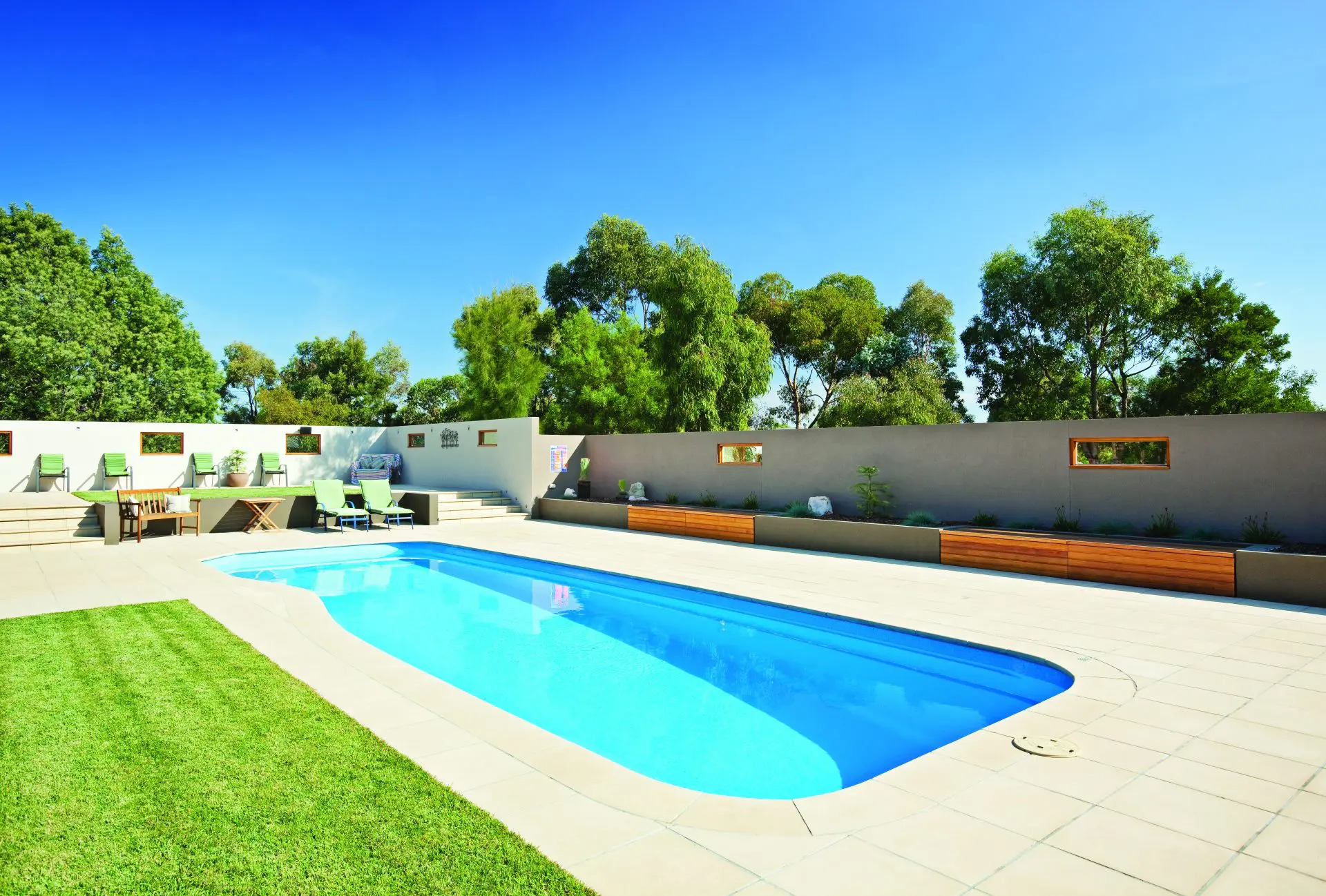
Finding Your Perfect Pool
We offer a wide range of pool types and configurations to create a custom pool that works for your property. In this guide, we’ll walk you through each decision point, helping you understand what matters most before you begin the design process.
Space and Requirements
Measure Your Available Space
Before deciding on the type of pool you want, you need to accurately measure your available space for a successful installation. Start by measuring the total length and width of your potential pool area, remembering that these measurements need to include more than just the pool itself. You’ll need additional space around the pool for decking, landscaping, and access routes for both daily use and maintenance.
Assess the practical aspects of your garden layout too, including existing features like trees, utility lines, or structures like sheds and pergolas that might affect where your pool can go. While a temporary requirement, access routes are particularly important, as installers will require clear paths to reach your chosen location with the necessary equipment like excavation machinery, which typically needs at least 3 metres of clear width.
Finally, how will your pool integrate with your outdoor living spaces? Ensure there’s adequate room for entertaining areas, storage, and the natural flow of movement around your garden.
Lifestyle Considerations
Your pool should reflect how you and your family plan to use the space. A young family with small children has vastly different needs compared to empty nesters looking for relaxation and exercise, or active households focused on entertaining friends and extended family.
Think honestly about your intended usage patterns. Will this primarily be a weekend retreat for relaxation, a daily exercise facility, or the centrepiece of your social entertaining? The frequency and style of use directly influences the ideal size, depth, and features that will serve you best. Additionally, bear pool maintenance in mind, as different designs and features require varying levels of ongoing care.