New: Design your pool online

Pros & Cons of Automatic Pool Covers, Slated vs Tarpaulin

There are two main types of automatic swimming pool covers in the UK: slatted and fabric (often called tarpaulin). Both types of cover have their various advantages and disadvantages, which we will take a look at in more detail below.

Slatted Covers

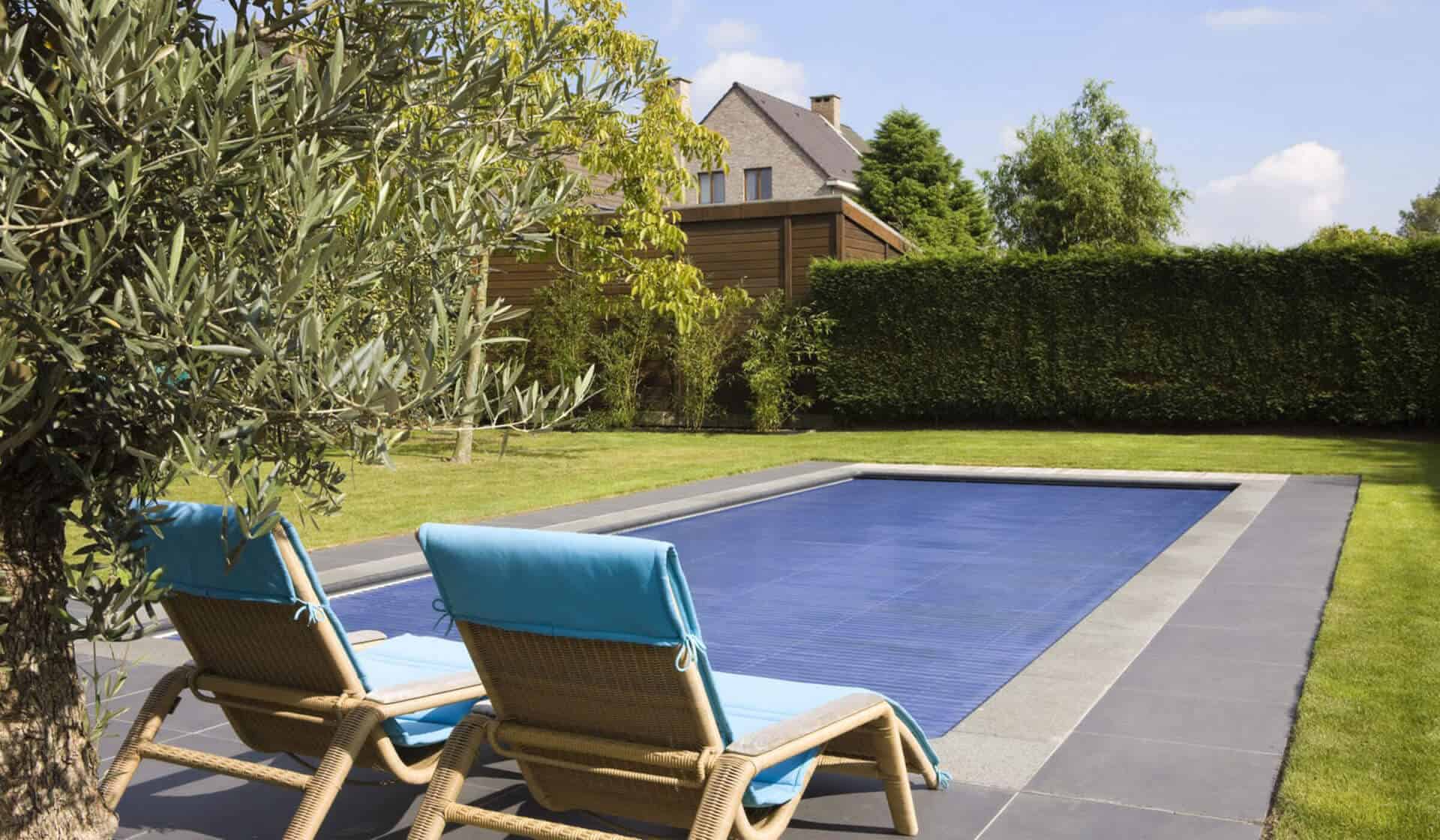
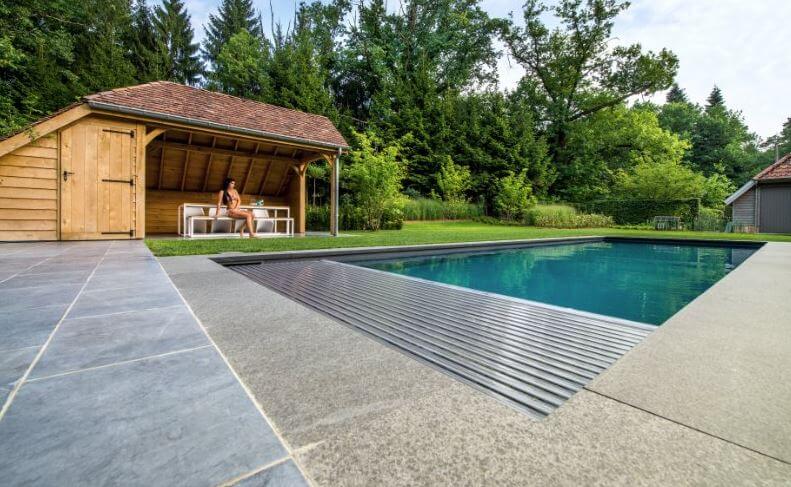
Slatted covers are made from interlocking PVC or Polycarbonate. They can be installed in pools either underwater, or on an above-ground roller, resting on the water’s surface and relying on the pool’s natural physical properties to float. They can be opened and closed using a 24volt (low voltage) drive motor, with the most common type of slats being solar PVC. They are hollow (like a double-glazing panel), coloured black underneath a clear top layer, and have a vacuum which heats up. They also have an air gap to prevent heat loss through the cover during the night.

Slatted covers are the most popular type of pool cover across the world, making up approximately 80% of the market. This is mainly thanks to the reliability and simplicity they offer. However, in order for them to work properly, they depend on the pool’s water level being correct so that they can open and close effectively. Compass Pools are fitted with an overflow as standard, and have the option of a digital auto top-up.

Likewise, polycarbonate covers are able to withstand heavy hail storms, so are a lot more durable than other types of pool covers on the market.

Benefits of Slatted Covers:

  • Reduce convection heat loss.
  • Eliminate evaporation heat loss.
  • Capture solar gains (solar version).
  • Frictionless roller.
  • Ultra-quiet.
  • Can support 100kg per square metre.
  • Maintenance-free motors.